It is our pleasure to announce the publication of David Pettegrew’s Corinthian Countrysides: Linked Open Data and Analysis from the Eastern Korinthia Archaeological Survey.

This book presents the history, methods, results, and analysis of the Eastern Korinthia Archaeological Survey (EKAS)which took place from 1997 to 2003 in the fields east of the city of Corinth and along the Saronic coastline. This intensive survey project collected a massive amount of information from this area that illuminates the bustling landscape surrounding the Greek and Roman city. Pettegrew’s work presents and analyzes this information, and encourages readers to dig into the range of archaeological datasets. Through the robust use of hyperlinks, maps, tables, and narrative, Corinthian Countrysides offers a comprehensive guide to analyzing the data collected by EKAS. The book is published in collaboration with the American School of Classical Studies at Athens.
You can download the book for free here and experience it in all of its digital glory. Or, if you love paper books or want to support the work of The Digital Press at the University of North Dakota you can follow the link to a buy a paperback copy.
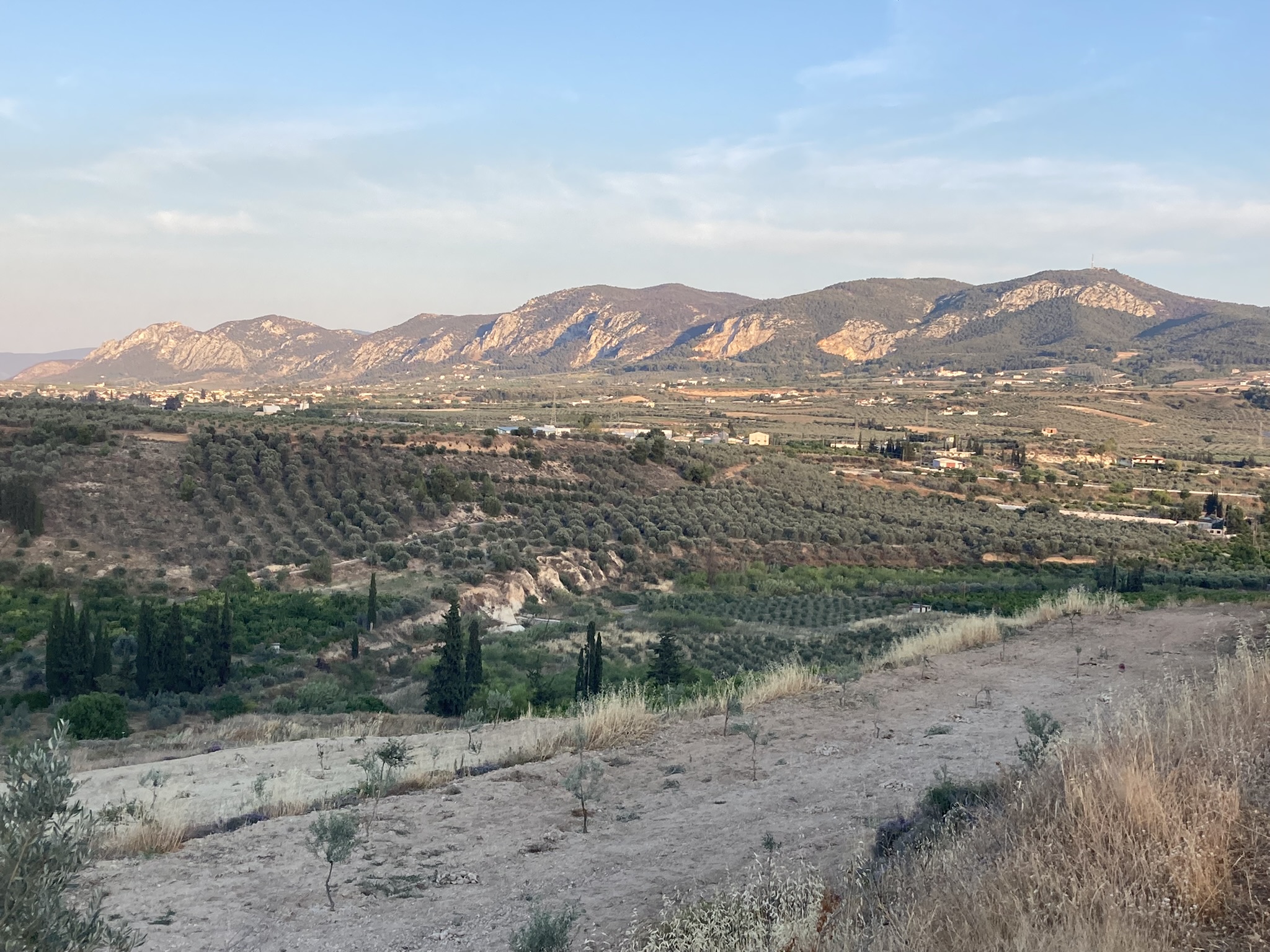
Pettegrew explains: “The publication itself makes available a wholly new source of information for talking about the history of the Corinthian countryside … I scaffolded the book to encourage the reuse of the project data, and if you read the book from start to finish, you’ll have all you need to play with the archaeological data.”
Pettegrew stressed the collaborative character of the book with partners ranging from the American School of Classical Studies at Athens, which supported the original project and collaborated on the publication of the book, to the dozens of American scholars who contributed to the data, to the Greek archaeological authorities who issued the permits and often worked alongside the survey teams in the field. Corinthian Countrysides looks to extend this spirit of collaboration even further:
“We’re trying to turn a page on an older model of scholarship in which archaeologists presented a tidy ‘final publication’ of archaeological work that closed conversation about primary evidence and kept the reader at arm’s length from the primary materials. What we hope to do here instead is encourage a new kind of slow archaeology that embraces iterative and ongoing study of data by inviting readers to become collaborators. The book adopts a more inclusive approach to making meaning in archaeology by handing off the keys to accessing, exploring, and reusing the project’s online datasets.”
The book not only looks back on the Eastern Korinthia Archaeological Survey, but also looks ahead both to future analysis of the data from that project and new projects that continue to engage with the city and its eastern hinterland. In that sense, perhaps it stands as the closing of one chapter of work in the area and the opening of another.
 The Digital Press at the University of North Dakota